
Solar Energy Transportation
Solar Energy Transportation
The majority of people associate solar power with rooftops covered in photovoltaic panels. It is easy to see why a lot of households are turning to solar power for clean, renewable energy.
However, affordable electricity for your home isn’t the only goal of solar power; there are many other applications for solar energy.
Examples of Solar Energy
While roof-mounted photovoltaic (photovoltaic)panels are the primary source of of this production, standalone devices can generate enough power for transportation as well as technology and industry.
Solar Energy Transportation
It is possible to believe that the concept of being able to navigate the globe without relying on fossil fuels is futuristic.
Solar Impulse 2 achieved the amazing feat in June of 2014. It weighs the same as a family car, but has a wingspan comparable to a plane. The lithium batteries can absorb sunlight during the day , and keep enough power to permit flying to go on during adverse weather conditions as well as at night.
The number of commercial vehicles with thin solar mats that cover their roofs is growing too. This idea is changing the transportation industry. Businesses save money on fuel, reduce emissions, and keep costs stable. The savings are beneficial to customers.
While solar-powered rail is in its infancy, it is growing rapidly. Solar panels installed close to railway lines supply enough power to run signals and lights at certain train stations. In the near future, fully-solar-powered trains could be possible. The rail network can be independent of the grid in the nation and reap a variety of economic benefits.
Hybrid solar-powered vehicles seem to be under-appreciated, no matter how efficient. The technology has advanced to the point where hybrid solar-powered vehicles can be competitive with gas-powered vehicles.
Solar Light
Although solar lighting can be utilized to light up a path or to make trees appear more prominent, it’s a very effective method of doing this.
String lights or spikes are simple to install and do not require power source. Instead solar panels are tiny and absorb sunlight during the day and store it in the battery to be used later on.
This technology is also utilized in more powerful Led bulbs. They require very little power to give adequate illumination. They can be used to light huge areas as well as driveways, as well as entrances. Solar-powered security lighting with the technology of pir detects movement and lights up automatically.
Solar Heating
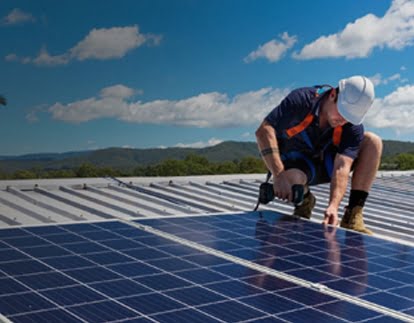
Thermal heating makes use of roofing-mounted panels (collectors) that harness sun’s energy to warm water. It’s easy and efficient enough to heat between 40 and 70 percent of the average family’s hot water requirements every year.
- The sun’s energy is absorbed into fluid, which is stored in tubes in each panel.
- The hot fluid passes via a heating exchanger before it can get to the hot storage tank for water.
- It is distributed around the pipes in the same manner as any other central heating system.
Solar energy comes for free so you can reduce your energy costs and carbon footprint by making less strain on your boiler.
Solar space heating utilizes solar energy and reduces use of fossil fuels. The system can heat entire houses and the water supply by adding heating exchanges. The system also makes use of rooftop solar evacuated tube panels, often referred to as collectors.
- The corn glycol lubricant that circulates inside the tubes. The fluid absorbs sunlight then flows back to a storage tank.
- The tank circulates and warms the water inside the heating system to temperatures of 130 to 175 degrees F.
- The hot water flows across your heating unit to supply you with heat.
A heat exchange is used to generate enough hot water to provide homes. This is ideal during summer months, where heating is not needed.
The most cost-effective and efficient method of heating pools is solar space heating technology.
Rooftop Solar Power
Photovoltaic cells use the sun’s energy to produce electricity. Then, it is converted into the power that is used for domestic and commercial properties. A 5kw system can be fully paid off over 6-9 years.
Some products and situations don’t require a full solar array powered by solar panels. For these devices, a small solar charger is adequate.
An inverter with a small capacity is required to operate devices that have a DC battery power. This allows the power to be alternated from the solar cells.
There are many appliances that can benefit from clean, free solar energy.
- Keyboards
- Refrigerator
- Telescopes
- Watches
- Radios
- Generators
- Outdoor showers
Solar in the Community
90 million homes in America cannot install solar panels due to (1) reason or other. The solar community system is made up of a collection of solar panels that are located in a central location that residents are able to make use of. Anyone who signs up on the spot receives a reduction in their utility bills and other benefits.
- Installation is simple and there is no need to worry in case your roof’s angle or the structure is not appropriate for solar power.
- You don’t need to buy a new car; instead there is a savings by signing up for an annual subscription.
- Solar power helps to defend against rising energy costs and interruptions in supply.
- Local economy; fossil fuel production depends on heavy industry, solar installations, and people-powered logistics.
- You can help reduce pollution and 02 emissions by doing your part to reduce the carbon footprint as well as reducing the impact of climate change.
Community solar energy helps your home, the local economy, and the environment.
Can solar energy be used in transportation?
There is a great deal of excitement about solar energy at the moment and many businesses, not only in energy, are trying to profit from it. This is especially true in solar transportation. We are witnessing the development of solar vehicles that are ultra-modern.
1. A solar-powered yacht
Imagine a vessel which doesn’t require fuel but only solar power. It is silent and produces no emissions and has an unlimited range.
According to the manufacturer, Silent 55 yachts have it all and more.
- Maintainable electric motor
- There isn’t any heat buildup
- The most robust and reliable marine propulsion system is available
- Batterie Banks come with an 8-year warranty
- Solar panels come with a 25-year warranty
It is equipped with 30 high-efficiency solar panels along with lithium batteries and the maximum power point tracking solar charge regulators. The manufacturer claims that there’s sufficient power as well as storage for the yacht’s ability to sail continuously throughout the night. The yacht also features a 15-kVA Inverter that powers the electrical components of all appliances. This includes a powered fore-swim platform as well as an electric windlass with 1,500 watts.
2. Solar electric cars
In the past, solar electric vehicles were considered a pipe dream in the automobile industry. Recent advances in technology have opened new avenues for the automotive industry. Many brands are now making cars that utilize solar power.
Hyundai for instance, recently introduced a new version that is called the Sonata Hybrid solar-powered car for North America. Although it’s not yet available, the model has rooftop solar panels that, Hyundai claims, will increase the car’s fuel efficiency and help to power its electric source. They also cut CO2 emissions.
Although it has been pointed out that the roof’s solar power is not able to improve range by more than 2 miles per hour, Hyundai deserves credit for taking the first steps towards making solar-powered vehicles available to mass production.
3. Solar aircraft
It was the Solar Impulse 2, an aircraft that is entirely powered through the sun’s energy, circling the globe in 2016. It did this without fuel.
This plane runs on more than 17,000 solar cells mounted on its wings. It is able to cross both Atlantic and Pacific oceans without the need for fuel. Bertrand Piccard was the sole pilot of the plane and he reached 29,000 feet during daylight. He returned to 5,000 at night.
Following the success with Solar Impulse 2, an HAPS (high-altitude pseudo satellite) powered by solar energy The Zephyr S, which was built by Airbus, flew for 25 days, 23 hours and 57 minutes. The Zephyr-T is a bigger version of the flight is in the process of development.
4. The solar-powered Hyperloop train
In 2013, Elon Musk presented the Hyperloop concept, an ultra-high-speed, high-speed transport system that significantly cut the time it takes to travel between cities. Hyperloop, he claims will require only 30 minutes to get between Los Angeles to San Francisco.
Musk envisaged Hyperloop as a new mode of transport after trains, cars and planes. It could transport people and freight with self-propelled pods. The pods are constructed of low-pressure vacuum tubes and can be moved at speeds of more than 700 miles an hour. This makes for a comfortable, efficient and speedy method to move freight and people.
MAD Architects, Hyperloop Transportation Technology further refined Musks‘ vision to create an environmentally sustainable design that is the Hyperloop train powered with solar panels and wind turbine forest.
Hyperloop’s vision is enthralling. It offers people a way to travel long distances in a way that is fast and clean and is not like flying with planes that are extremely polluting.
To generate electricity for Hyperloop’s interactive information boards and Hyperloop tunnels for trains will be equipped with solar panel skin modules. The tunnel would also be fitted with wind turbine forests that are bladeless.
While the concept may not be realized until the next year, businesses are exploring all possibilities.